

A Faster Flap Disc Is Not Always a More Productive Flap Disc: The Difference Between Cutting Speed and Total Material Removal
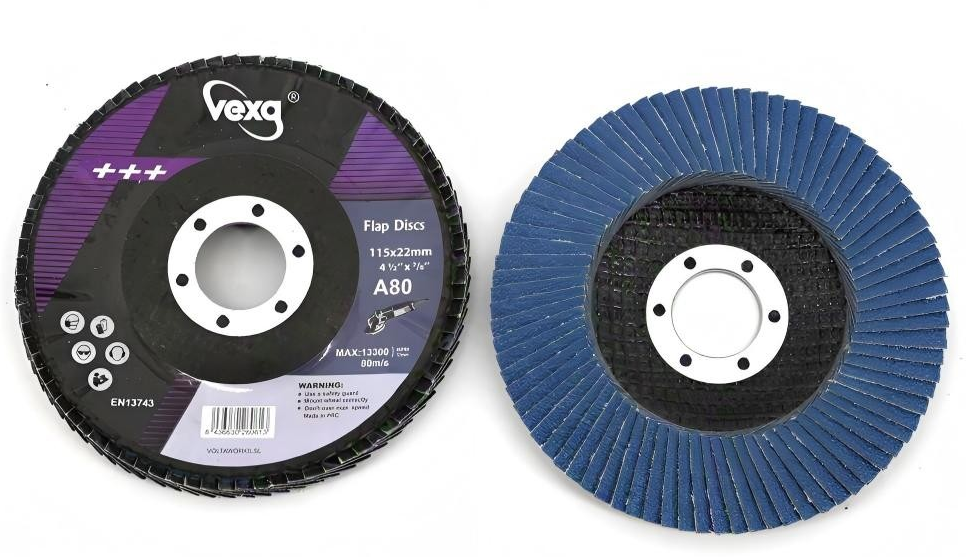
A flap disc that cuts aggressively gets noticed immediately.
The operator feels the difference.
Material disappears faster.
The first few minutes look impressive.
But production does not end after five minutes.
The more important question is:
How much useful work does the disc deliver before it needs to be replaced?
This is where cutting speed and productivity can become two very different things.
1. Peak Cutting Rate Is Only One Part of Performance
Imagine two flap discs.
Disc A
Very aggressive initial cutting.
High material removal during the first few minutes.
Rapid abrasive consumption.
Disc B
Slightly lower initial aggression.
More controlled wear.
Stable cutting behavior throughout a longer working cycle.
If the operator evaluates only the first few minutes, Disc A appears superior.
But if we measure:
Total material removed per disc
the result may be completely different.
For production applications, the second measurement is often more meaningful.
2. Abrasive Consumption Determines the Shape of the Wear Curve
A flap disc contains a large number of individual abrasive flaps.
Each flap gradually changes as the abrasive grains fracture and wear.
During the early stage, many fresh cutting points are available.
As sanding or grinding continues, the abrasive structure evolves.
The critical engineering question is not simply how quickly the grains cut.
It is:
How efficiently are new cutting points generated as the disc wears?
If abrasive consumption is excessively concentrated in the early stage, the disc may deliver impressive initial performance but experience a rapid decline afterward.
A more controlled wear mechanism can produce a flatter performance curve.
That can be more valuable in continuous production.
3. Operator Pressure Can Hide the Real Performance of a Disc
There is another variable that makes flap disc comparison difficult:
operator pressure.
When a disc begins to lose cutting ability, operators often compensate by applying more force.
This can temporarily restore material removal.
But it also changes the working conditions of the disc.
Higher pressure can increase:
Contact force
Abrasive consumption
Heat generation
Flap deformation
Operator fatigue
The disc may appear to remain productive.
But part of the hidden cost has simply moved from the abrasive to the operator and the process.
A good flap disc should not require progressively higher pressure to maintain acceptable productivity.
4. Disc Life and Useful Life Are Not the Same
A flap disc can physically remain usable while its productive performance has already declined.
This distinction is important.
Physical Life
How long the disc remains technically usable.
Useful Life
How long the disc delivers an acceptable material removal rate and surface result.
These are not necessarily the same.
A disc that can continue grinding for another 20 minutes at very low efficiency is not necessarily delivering useful production value.
For industrial users, the relevant question is:
When does the disc stop being economically productive?
That point may occur well before the abrasive is completely consumed.
5. The Backing and Flap Structure Influence Productivity
This is where construction becomes important.
The abrasive grain does not work independently.
Its performance depends on:
**Abrasive Grain
Cloth Structure
Flap Geometry
Overlap
Bonding
Backing Plate**
These variables influence how the abrasive engages the workpiece and how the disc behaves as it wears.
A structure that maintains stable contact can help preserve cutting efficiency.
A poorly balanced structure may lose effective contact earlier, even if significant abrasive material remains.
Therefore:
Abrasive life ≠ productive life
and:
More abrasive material ≠ automatically more productivity.
6. The Best Comparison Is Output per Disc
For a production environment, flap discs should ideally be compared using measurable output.
For example:
Material removed / disc
or:
Parts processed / disc
or:
Production time / disc
These metrics combine cutting performance and disc consumption.
Consider:
Disc A
10 kg material removed
$2.00 disc cost
Disc B
14 kg material removed
$2.40 disc cost
Disc B costs more per disc.
But the cost per kilogram removed is lower.
This is why comparing flap discs purely by purchase price can lead to the wrong conclusion.
The correct unit of comparison is often cost per useful output.
7. Aggressiveness Still Matters — But Within a Process Window
This does not mean aggressive cutting is undesirable.
High initial removal rate can be extremely valuable when the application requires rapid stock removal.
The engineering objective is to find the right balance between:
Cutting Rate
Abrasive Consumption
Heat
Operator Pressure
Surface Requirement
Disc Life
A disc designed for heavy weld blending may require a very different performance profile from one used for light surface preparation.
There is no universal “best” wear curve.
There is only the most appropriate wear curve for a specific application.
8. The VEXA Engineering Perspective
At VEXA, we believe flap disc performance should be evaluated beyond initial aggression.
When comparing products, we look at the complete working cycle:
Initial Cutting
→ Wear Development
→ Cutting Retention
→ Surface Consistency
→ Final Useful Life
The objective is to maximize the amount of useful work produced by every disc.
This means looking beyond:
Price per disc
and beyond:
Initial cutting speed
toward a more meaningful metric:
Cost per Useful Output
That is where abrasive engineering connects directly with manufacturing economics.
Engineering Takeaway
A flap disc that cuts faster is not automatically the disc that produces more.
The real question is what happens after the first few minutes.
If aggressive initial cutting leads to rapid abrasive consumption, increased pressure, higher heat, and early performance decline, the apparent productivity advantage may disappear.
The better-performing disc is the one that delivers the right combination of:
Removal Rate + Wear Stability + Disc Life + Process Cost
throughout the actual production cycle.
Peak performance gets attention.
Total useful output determines productivity.
Comparing flap discs for your production?
If you are evaluating different flap discs, send us:
Material + Grit + Disc Type + Machine + Current Disc + Approximate Material Removal
We can help compare the products based on cutting performance, usable life, and cost per useful output rather than price per disc alone.
Samples can also be arranged for real-world comparative testing.
VEXA — Professional through focus.


