

The Performance of a Flap Disc Is Built Into the Flap: Geometry, Overlap and Wear Behavior Behind Consistent Grinding
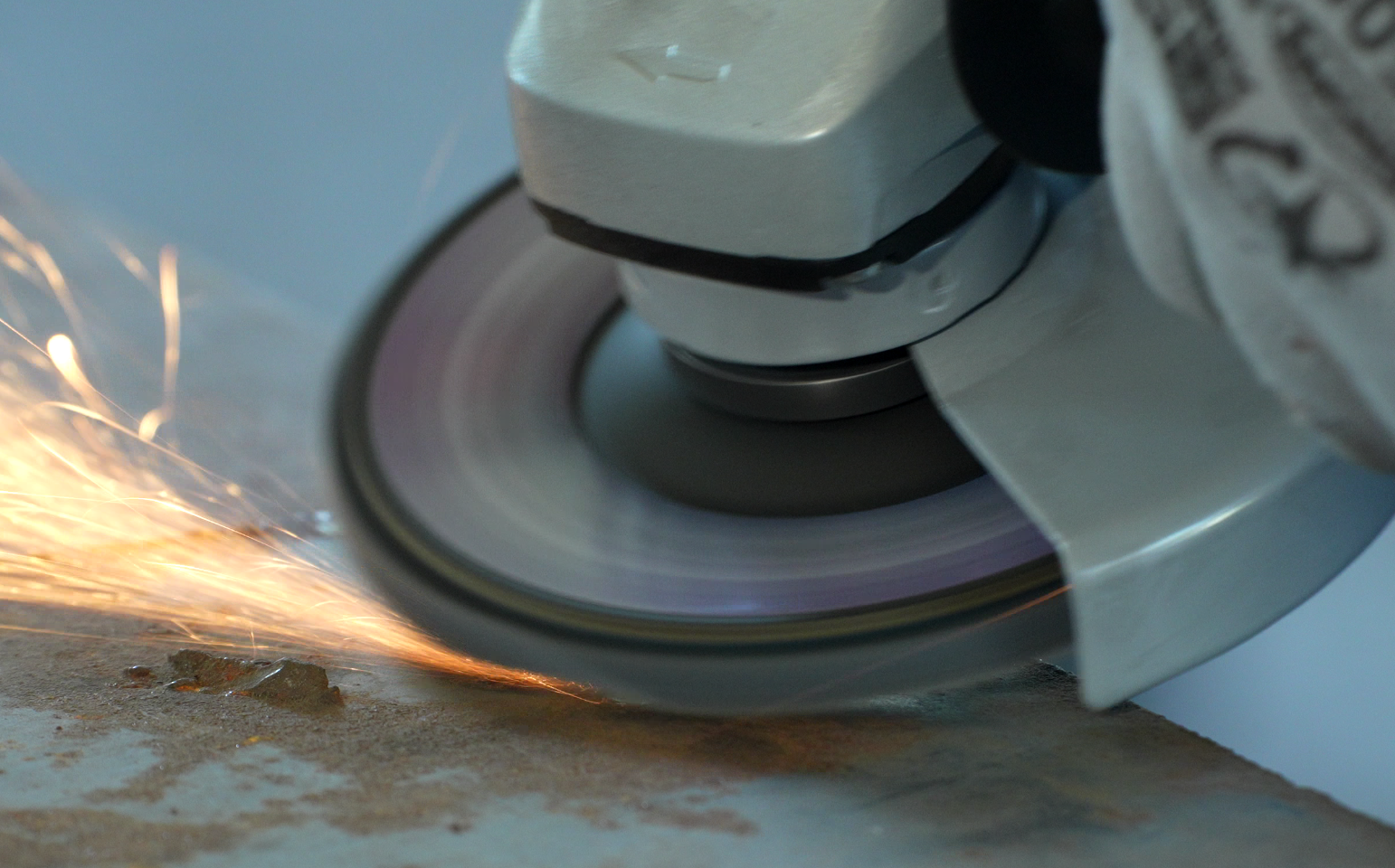
Two flap discs can have the same:
Diameter.
Grit.
Abrasive type.
Flap count.
Yet their actual performance can be completely different.
One cuts quickly and maintains a consistent finish.
The other feels aggressive at first, then becomes slow, uneven, or difficult to control.
The difference is not always the abrasive grain.
A significant part of the performance is built into the flap structure itself.
Because a flap disc is not simply abrasive cloth attached to a backing plate.
It is a controlled mechanical system in which every flap contributes to cutting, heat dissipation, pressure distribution, and wear behavior.
1. Every Flap Is an Individual Cutting Element
During operation, the flaps continuously contact the workpiece.
Unlike a conventional grinding wheel, the abrasive surface is not one continuous body.
It consists of multiple overlapping abrasive flaps.
Each flap enters the contact zone, carries part of the load, flexes under pressure, removes material, and gradually wears.
This creates a continuously changing cutting interface.
The performance of the disc therefore depends on how consistently those individual flaps participate in the process.
If the load is distributed unevenly, some flaps can wear much faster than others.
The result can be:
Uneven wear → unstable contact → inconsistent removal → irregular surface finish
Flap geometry is therefore a functional parameter—not simply a visual characteristic.
2. Overlap Controls How the Abrasive Surface Evolves
Flap overlap is one of the less visible variables in flap disc construction.
Too little overlap can reduce the continuity of the abrasive surface.
The backing plate may become exposed sooner, and the disc can lose its effective cutting area as the flaps wear.
Too much overlap creates another challenge.
A greater amount of abrasive material is concentrated in the same working area, increasing the amount of material available for cutting—but potentially changing flexibility, heat behavior, and how individual flaps engage the workpiece.
The objective is not maximum overlap.
It is controlled overlap that maintains effective abrasive exposure throughout the wear cycle.
3. Flap Length Changes the Mechanical Response
The unsupported portion of each flap behaves differently depending on its length.
Longer flaps generally provide greater flexibility.
Shorter flaps provide a more rigid working response.
This affects how the disc behaves when pressure is applied.
A highly flexible flap structure can conform well to irregular surfaces and produce smoother blending behavior.
A more rigid structure can provide stronger contact and greater resistance to deformation during aggressive stock removal.
Neither is universally superior.
The required flap behavior depends on the application.
This is why the same abrasive cloth can produce very different results when used in different flap constructions.
4. Flap Angle Influences Contact Behavior
The orientation of the flaps changes how the abrasive approaches the workpiece.
As the disc rotates, the flaps enter and leave the contact zone continuously.
Their geometry determines how mechanical force is transferred into the abrasive surface.
A properly engineered arrangement can help distribute the working load across multiple flaps rather than concentrating excessive stress on a small number of cutting elements.
This influences:
Cutting stability
Wear distribution
Heat generation
Surface consistency
Operator control
The goal is not simply to make the disc more aggressive.
It is to create a predictable contact mechanism.
5. Abrasive Grain and Flap Structure Must Work Together
A high-performance abrasive grain cannot compensate for poor flap construction.
Imagine two discs using the same zirconia abrasive.
One has an optimized flap arrangement.
The other has poor overlap, inconsistent flap dimensions, or unstable bonding.
The abrasive grain is identical.
The cutting behavior is not.
This is because the grain only performs when the mechanical structure allows it to engage the workpiece effectively.
The real system is:
**Abrasive Grain
Cloth Structure
Flap Geometry
Overlap
Bonding
Backing Plate**
Changing one element can influence the entire wear behavior of the disc.
6. A Flap Disc Has a Moving Wear Front
This is one of the most important differences between a flap disc and a conventional abrasive wheel.
As the flaps wear, new abrasive material is continuously exposed.
The working surface is therefore constantly changing.
This creates a moving wear front.
A well-engineered disc should maintain a relatively stable working behavior as this wear front progresses.
A poorly balanced structure can experience a rapid change in:
Contact area
→ Flexibility
→ Pressure distribution
→ Cutting rate
The operator may then feel the disc becoming weaker even though significant abrasive material remains.
This is not simply “abrasive life.”
It is a change in the mechanical behavior of the entire flap structure.
7. More Flaps Do Not Automatically Mean Longer Life
Flap count is often used as an easy comparison between products.
But more flaps do not automatically mean better performance.
Increasing flap count changes:
Abrasive coverage
Contact distribution
Flexibility
Cooling behavior
Wear characteristics
A disc with fewer, correctly engineered flaps may deliver a more effective cutting response than a disc with a higher flap count but poorly balanced geometry.
The relevant question is not:
How many flaps does the disc have?
It is:
How effectively does the flap structure use the available abrasive?
8. The Real Productivity Metric Is Material Removed per Disc
A flap disc should not be evaluated only by its initial aggression.
Consider two products:
Disc A
Higher initial cutting rate
Shorter usable life
Disc B
Slightly lower initial cutting rate
More stable wear
Longer effective working cycle
If Disc B removes more total material before replacement, it may be the more productive solution.
This is why professional flap disc testing should consider:
Initial removal rate
Cutting retention
Wear consistency
Surface finish
Heat generation
Total material removed per disc
The best product is not necessarily the one that feels most aggressive during the first few minutes.
It is the one that converts the abrasive material into the most useful work.
9. The VEXA Engineering Perspective
At VEXA, we treat flap disc construction as a combination of abrasive and mechanical engineering.
When developing or evaluating a flap disc, we consider the interaction between:
Abrasive Type
× Grain Size
× Cloth Structure
× Flap Length
× Flap Count
× Overlap
× Geometry
× Backing Plate
× Application
The objective is to create a controlled wear process.
The disc should not simply remove material.
It should maintain predictable cutting behavior as the abrasive surface progressively changes.
That is where construction quality becomes visible in real production.
Engineering Takeaway
A flap disc is more than abrasive cloth arranged around a backing plate.
Every flap is part of the cutting system.
Its length, angle, overlap, flexibility, abrasive structure, and bonding all influence how the disc transfers energy into the workpiece.
The specification sheet tells you what the disc contains.
The construction determines how that material performs.
And for production users, the real question is not:
“How aggressive is the disc?”
It is:
“How much useful work can the disc deliver before its performance falls outside the process window?”
Comparing flap discs for your application?
If you are seeing differences in:
Initial cutting
Disc life
Flap wear
Heat generation
Surface finish
Material removal per disc
send us your:
Material + Grit + Flap Disc Type + Machine + Current Product + Application
We can evaluate the construction and arrange samples for comparative testing.
VEXA — Professional through focus.


