

A Diamond Drill Bit Does Not Stop Cutting Because the Diamond Is Gone: The Hidden Wear Mechanism Behind Diamond Core Drilling Performance
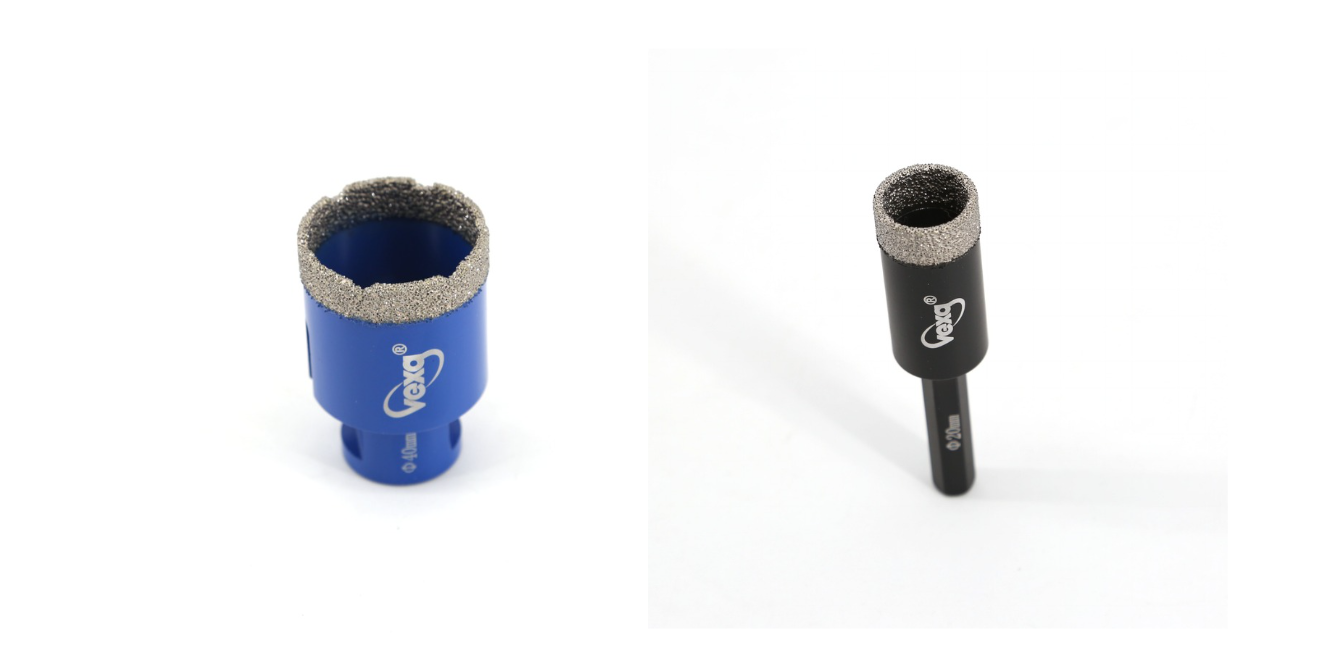
A diamond drill bit can start cutting extremely fast.
The first hole is clean.
The second hole is still smooth.
Then performance begins to change.
Cutting becomes slower.
The bit starts generating more heat.
The operator applies more pressure.
Eventually, the drill seems to “stop cutting.”
But in many cases, the diamonds are still there.
So what actually changed?
The answer lies in the relationship between:
Diamond Exposure + Bond Wear + Heat + Debris Removal
A diamond drill bit is not simply a metal tube covered with diamonds.
It is a controlled cutting system designed to continuously expose fresh diamond cutting points.
1. Diamond Does the Cutting — But the Bond Controls the Cutting
Unlike conventional drill bits, a diamond drill bit relies on exposed diamond particles to abrade the workpiece.
The basic process is:
Diamond Contacts Material
↓
Diamond Removes Material
↓
Diamond Wears
↓
Bond Material Wears
↓
Fresh Diamond Becomes Exposed
↓
Cutting Continues
This process is known as controlled abrasive exposure.
The diamond itself is extremely hard.
But maximum hardness does not automatically create maximum drilling performance.
The bond must release diamonds at the appropriate rate.
2. If the Bond Is Too Strong, the Bit Can Become “Glazed”
One common failure mode is excessive diamond retention.
The diamonds remain embedded in the bond even after their cutting efficiency has decreased.
The exposed diamond surface becomes less effective.
The contact area increases.
Friction rises.
Heat builds up.
The drilling process begins to feel slower and slower.
This can create a familiar sequence:
Reduced Cutting
→ More Pressure
→ More Friction
→ More Heat
→ Further Reduction in Cutting Efficiency
The bit may still look like it contains plenty of diamond.
But the active cutting points are no longer working efficiently.
This is one reason visual inspection alone cannot determine diamond tool performance.
3. If the Bond Is Too Weak, Diamond Is Wasted
The opposite problem is excessive diamond release.
Fresh diamond particles are released before they have been fully utilized.
This can produce:
Rapid diamond consumption
Short tool life
Unstable cutting performance
Higher cost per hole
The objective is therefore not:
Maximum Diamond Retention
or
Maximum Diamond Release
It is:
Controlled Diamond Renewal
The bond should retain the diamond long enough to use its cutting potential, while releasing it when the cutting edge becomes ineffective.
That balance is one of the fundamental design challenges in diamond drilling.
4. Diamond Concentration Is Not Simply “More Is Better”
Another parameter often discussed is diamond concentration.
It may seem logical:
More Diamond → More Cutting
But increasing diamond concentration also changes the cutting interface.
If too many diamond particles are exposed simultaneously, the load is distributed across more cutting points.
The load carried by each individual diamond can decrease.
If the concentration is too low, individual diamonds may experience excessive loading and wear rapidly.
Therefore, the useful relationship is closer to:
Diamond Concentration
× Diamond Size
× Diamond Exposure
× Bond Strength
× Workpiece Characteristics
The optimum combination depends on the application.
5. Heat Is One of the Biggest Enemies of Diamond Drilling
Diamond drilling generates friction at the cutting interface.
If heat is not effectively managed, several problems can develop.
Temperature Rises
↓
Bond Properties Change
↓
Diamond Retention Changes
↓
Cutting Efficiency Declines
↓
Tool Life Becomes Unstable
This is particularly important when drilling hard, dense materials.
The harder the material and the higher the cutting resistance, the more important thermal management becomes.
That is why drilling technique matters almost as much as the tool itself.
6. Dust and Slurry Must Leave the Cutting Zone
Diamond drilling does not only remove material.
It also creates debris.
If the debris cannot leave the cutting interface efficiently, it can remain trapped between the tool and workpiece.
This increases:
Friction
Heat
Cutting resistance
Surface loading
The cutting process then becomes less efficient.
The basic relationship is:
Cutting
↓
Material Removal
↓
Debris Generation
↓
Debris Evacuation
↓
Fresh Cutting Interface
If the fourth step fails, the first step eventually suffers.
This is why the geometry of the drilling surface, diamond distribution, and cooling method need to work together.
7. The Machine Interface Changes the Working Conditions
At VEXA, our diamond drill bit range includes two common machine interfaces:
M14 Thread
Designed for direct connection to suitable angle grinders.
The M14 interface allows the tool to be mounted directly onto the machine spindle.
This makes it particularly suitable for applications where the operator needs:
High Rotational Speed + Direct Tool Connection + Flexible Operation
But the operating conditions of an angle grinder are very different from those of a conventional electric drill.
Hex Shank
Designed for use with compatible electric drills and similar machines.
The hex shank provides a familiar interface for drill-based applications.
This configuration is particularly useful where the operator needs:
Drilling Convenience + Easy Tool Change + Drill-Based Operation
The important point is that the interface is not merely a connection detail.
It determines the machine platform on which the diamond tool operates.
8. M14 and Hex Shank Should Not Be Treated as the Same Tool
Even when the diamond cutting section is similar, the machine platform can change:
Rotational speed
Available torque
Operator control
Cooling method
Drilling pressure
Application environment
Therefore, selecting a diamond drill bit should begin with:
Workpiece
Hole Diameter
Hole Depth
Machine
Operating Method
rather than simply:
“Which diamond bit is cheapest?”
A tool optimized for an angle grinder environment may not produce the same behavior when transferred to a drill platform.
9. The Real Performance Metric Is Cost per Hole
A diamond drill bit should not be evaluated only by its purchase price.
A more useful production metric is:
Cost per Useful Hole
For example:
Bit A
Lower purchase price
But drills fewer holes.
Bit B
Higher purchase price
But drills significantly more holes with stable cutting performance.
The second tool may actually produce a lower cost per hole.
An even better comparison considers:
Cost per Hole
Drilling Time
Operator Pressure
Tool Change Frequency
Hole Quality
This converts diamond tool performance from a product specification into a measurable production result.
10. The VEXA Engineering Perspective
At VEXA, we evaluate diamond drill bits as a complete cutting system.
The key variables include:
Diamond Type
× Diamond Size
× Diamond Concentration
× Bond Characteristics
× Diamond Exposure
× Drilling Geometry
× Heat Dissipation
× Debris Evacuation
× Machine Interface
× Application Conditions
The goal is not to maximize one parameter.
It is to create a controlled relationship between diamond wear and bond wear.
The ideal process is:
Sharp Diamond
→ Controlled Wear
→ Fresh Diamond Exposure
→ Stable Cutting
→ Predictable Tool Life
That is what allows a diamond drill bit to continue producing useful holes rather than simply consuming diamond material.
Engineering Takeaway
A diamond drill bit does not perform well simply because it contains diamond.
The real engineering challenge is controlling when the diamond works, when it wears, and when a fresh cutting point appears.
Too much retention can lead to glazing.
Too little retention can waste diamond.
Poor heat management can accelerate performance loss.
Poor debris evacuation can turn a sharp tool into a high-friction tool.
And the wrong machine interface can prevent the tool from operating in its intended working range.
So when comparing diamond drill bits, don't ask only:
“How much diamond is on the tool?”
Ask:
“How effectively is the diamond being used?”
Evaluating diamond drill bits?
If you are sourcing diamond drill bits for different applications, send us:
Hole Diameter + Workpiece Material + Hole Depth + Machine Type + Required Hole Quantity
For example:
Angle Grinder → M14
or
Electric Drill → Hex Shank
We can recommend the appropriate configuration and arrange samples for comparative testing.
VEXA — Professional through focus.


