
The Most Overlooked Failure Point in Abrasive Discs: The Center Ring
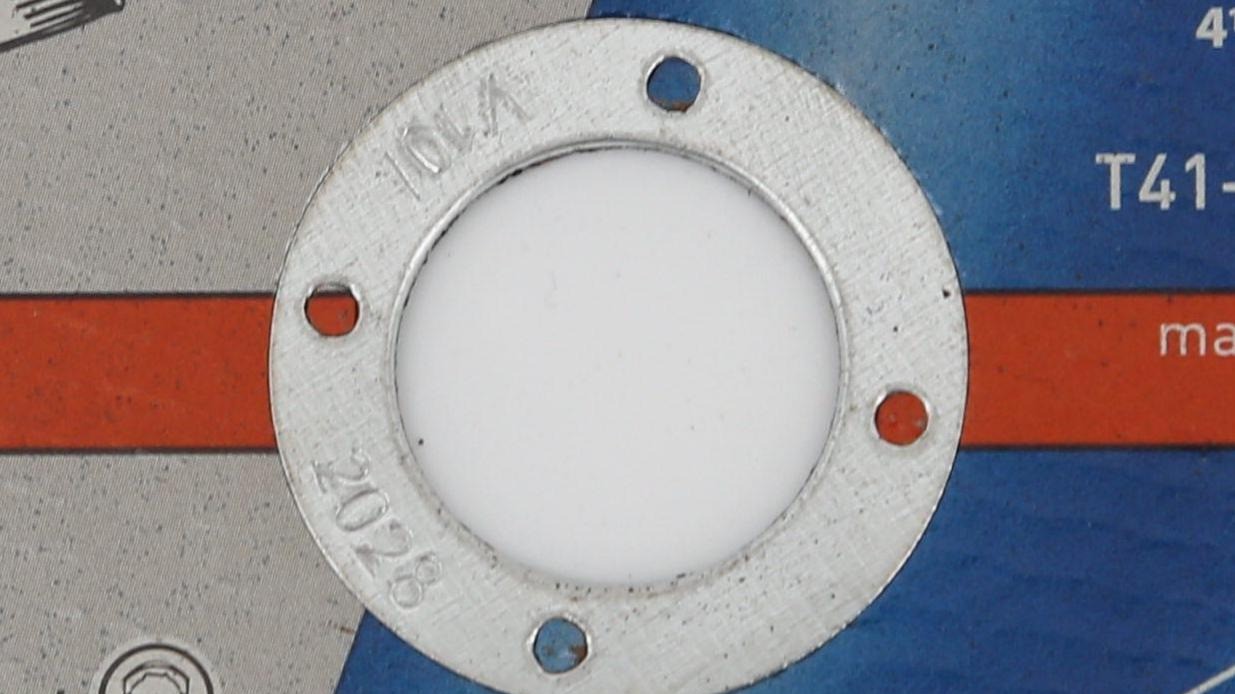
Most abrasive discs don't fail because of the grain. They fail at the center.
At 12,000 RPM, the most critical component isn't the abrasive-it's thecenter steel ring (bush).
After years in the industry, I've seen countless "premium" discs fail not because they couldn't cut… but because of poorinterface engineering.
Here's what actually separates a reliable disc from a risky one:
1. Spindle-Flange Interface Stability The steel ring is theonlyconnection between your machine and the disc. If concentricity tolerance exceeds ±0.05 mm, dynamic imbalance at high speed introduces vibration — not just uncomfortable, but destructive. → This directly accelerates spindle bearing wear and leads to premature failure.
2. Mechanical Interlock vs. Simple Pressing Many discs on the market simplypressthe ring into the hole. That's not engineering — that's a weak point.
A properly designed center ring should form a mechanical interlockwith the resin-fiberglass matrix. → Result: stable torque transfer, no slippage, no localized cracking under load.
3. Thermal Expansion Matching Under heavy grinding, heat builds up fast at the center. If the steel ring and resin bond expand differently, the interface loosens. → This is where many discs silently fail.
A well-engineered system ensures synchronized expansion, keeping the structure tight even under extreme conditions.
What does this mean in practice?✔ Less vibration at high RPM
✔ More stable cutting performance
✔ Longer tool life under heavy-duty use
✔ Lower total cost over time
The takeaway: Don't just evaluate the sparks. Evaluate the center. If you're currently testing new abrasive suppliers, I'm happy to provide samples for high-RPM comparison testing.
Let's see the difference where it actually matters.


