

The Bit Drills the Hole — But Why Is the Hole Still Not Good Enough? The Hidden Engineering Behind Hole Quality, Edge Chipping and Drilling Stability.
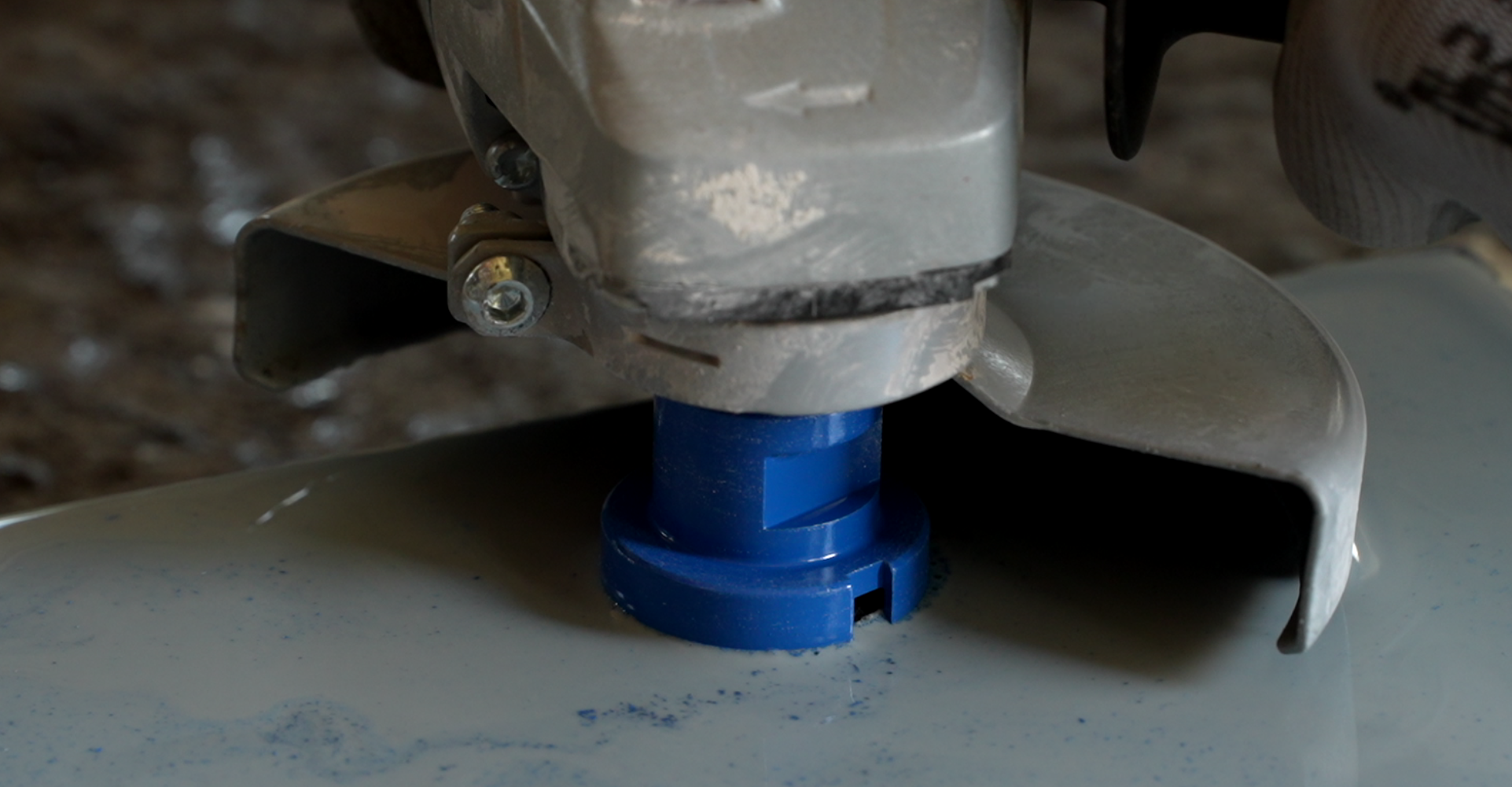
A diamond drill bit can penetrate the material successfully.
But that does not necessarily mean it has produced a good hole.
The hole may be oversized.
The edge may be chipped.
The wall may be rough or uneven.
The hole may not be perfectly round.
And sometimes, the problem is not whether the diamond can cut.
It is whether the entire cutting system remains stable while the hole is being formed.
1. Drilling Through Is Not the Same as Drilling Well
For professional drilling applications, “it made a hole” is only the first requirement.
Actual hole quality can involve:
• Hole diameter consistency
• Roundness
• Hole-wall condition
• Entrance-edge chipping
• Exit-edge breakout
• Drilling stability
• Overall dimensional consistency
A diamond drill bit removes material through a continuously moving annular cutting zone.
If that cutting zone is unstable, material removal becomes uneven.
One side of the tool may carry more load than the other.
The result can be:
Uneven Cutting Load → Tool Deflection → Irregular Material Removal → Poor Hole Geometry
This is why two diamond drill bits with similar cutting ability can produce very different hole quality.
2. Runout: The Small Movement That Changes the Whole Hole
One of the most overlooked factors in hole quality is radial runout.
The tool does not need to be visibly wobbling for runout to affect the cutting process.
Even a small eccentricity can cause the cutting edge to engage the workpiece unevenly during every rotation.
Instead of:
Uniform Load → Uniform Cutting
the system becomes:
Uneven Load → Localized Cutting → Uneven Wear & Material Removal
This can influence:
• Hole roundness
• Diameter stability
• Edge quality
• Tool vibration
• Localized heat generation
The problem may come from the tool itself, the machine spindle, the tool interface, or the way the tool is mounted.
That means diamond performance cannot always be evaluated independently from machine stability.
3. The Most Dangerous Moment May Be the Last Few Millimeters
For brittle materials, breakthrough is often more critical than initial entry.
At the beginning of drilling, the material surrounding the cutting zone provides substantial support.
But as the tool approaches the opposite surface, the remaining material becomes thinner and increasingly unsupported.
The cutting conditions change.
The final stage can therefore become:
Reduced Material Support → Higher Local Stress → Crack Propagation → Edge Chipping / Breakout
This is why a hole can look clean during most of the drilling process but suddenly chip badly at breakthrough.
The operator may instinctively increase pressure to finish the hole faster.
But for brittle materials, excessive feed pressure at breakthrough can make the problem worse.
Faster breakthrough does not necessarily mean better breakthrough.
4. Entry and Exit Are Not the Same Cutting Condition
A common mistake is to treat the entire drilling process as one uniform operation.
It is not.
The tool experiences different mechanical conditions at:
Entry → Full Engagement → Breakthrough
At entry, the tool must establish stable contact with the material.
During full engagement, the annular cutting zone becomes relatively stable.
At breakthrough, the remaining material thickness decreases and the risk of localized fracture increases.
This means drilling parameters should be considered together with the stage of engagement.
For brittle materials, controlling:
• Feed pressure
• Tool alignment
• Machine stability
• Cooling / debris evacuation
• Breakthrough behavior
can be just as important as the diamond cutting capability itself.
5. Material Brittleness Changes the Engineering Equation
Not every material responds to diamond drilling in the same way.
Glass, ceramic, porcelain, stone, sintered materials and other brittle substrates can fail through crack initiation and propagation rather than simple plastic deformation.
The objective is therefore not simply:
Maximum Cutting Speed
but rather:
Controlled Material Removal + Controlled Crack Development
A tool that cuts aggressively but generates excessive localized stress may produce a faster hole with poorer edges.
For precision applications, the better question is not:
“How fast did the bit drill?”
It is:
“How consistently did the bit form the hole?”
The VEXA Engineering Perspective
Hole quality is the result of a complete mechanical system.
Diamond Characteristics
↓
Cutting Geometry
↓
Tool Runout & Alignment
↓
Machine Stability
↓
Feed & Rotation Conditions
↓
Material Response
↓
Final Hole Quality
This is why evaluating a diamond drill bit only by drilling speed can be misleading.
A professional tool should be evaluated by the quality and consistency of the holes it produces under the intended application conditions.
For VEXA diamond drill bits, the engineering variables include:
• Diamond specification
• Cutting structure
• Tool geometry
• Dimensional consistency
• Interface stability
• Application-specific drilling parameters
• Material characteristics
The target is not simply to remove material.
The target is to remove material predictably.
Engineering Takeaway
A diamond drill bit can be extremely aggressive and still produce a poor hole.
Because drilling performance has two dimensions:
How fast the material is removed
and
How well the hole is formed.
For brittle materials especially, the final few millimeters can determine the quality of the entire hole.
The bit does not simply drill a hole.
It controls how the material fails around the hole.
That is where diamond drilling becomes an engineering problem.
Evaluating Hole Quality?
If you are experiencing:
• Excessive edge chipping
• Oversized or inconsistent holes
• Poor hole-wall quality
• Breakout at breakthrough
• Excessive vibration or wobble
we can evaluate the application based on:
Hole Diameter + Material + Material Thickness + Machine Type + Drilling Method + Target Hole Quality
A controlled comparison is often more useful than simply comparing drilling speed.
VEXA — Professional through focus.


