

The Bit Starts Fast — Then Suddenly Slows Down. Where Did the Cutting Performance Go? The Hidden Interaction Between Heat, Debris and the Diamond Cutting Zone.
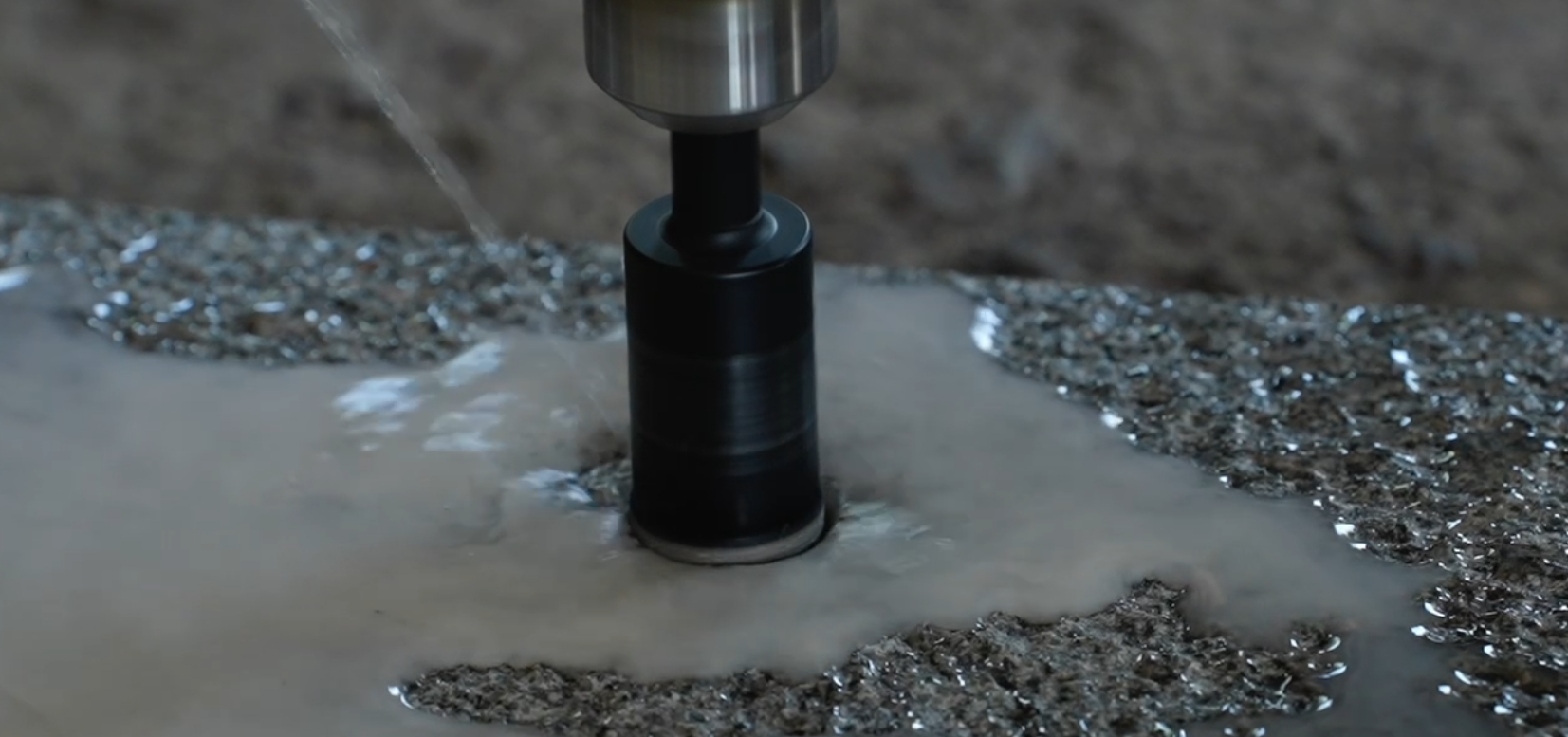
A diamond drill bit can start drilling aggressively.
The first few holes look excellent.
Then something changes.
Cutting becomes slower.
The tool begins to generate more heat.
The operator needs more pressure.
The drilling sound changes.
And eventually, the bit feels like it has “gone dull.”
But sometimes, the diamond itself is not the first thing that failed.
The problem may have started inside the cutting zone.
1. The Cutting Zone Is Also a Heat Zone
Diamond is extremely hard.
But that does not mean a diamond drill bit can ignore heat.
During drilling, mechanical energy is converted into heat through friction, material removal, and deformation/fracture at the cutting interface.
The critical question is:
Where does that heat go?
A simplified system looks like:
Cutting → Friction → Heat Generation
The heat must then be transferred away through:
Tool + Workpiece + Cooling Medium + Airflow / Debris Removal
If heat generation continuously exceeds heat removal, the cutting zone becomes progressively hotter.
This can change the behavior of the entire drilling system.
2. Debris Is Not Just Waste — It Can Become a Cutting Problem
Every hole produces debris.
The problem begins when that debris cannot leave the cutting zone efficiently.
Fine particles and fractured material can accumulate around the cutting interface.
Instead of:
Diamond → Fresh Material
the cutting zone begins to behave more like:
Diamond → Accumulated Debris → Material
The effective cutting action decreases.
At the same time, trapped debris can increase friction.
That creates a feedback loop:
Poor Debris Evacuation
↓
Higher Friction
↓
More Heat
↓
Reduced Cutting Efficiency
↓
Higher Required Pressure
↓
Even More Heat
This is why a drill bit can gradually lose cutting performance even when its diamond cutting elements are still present.
3. Dry Drilling Changes the Thermal Equation
Dry drilling is attractive because it is simple.
No water supply.
No wastewater.
No additional cooling equipment.
But removing the cooling medium also changes how heat is managed.
In dry drilling, a greater proportion of the generated heat must be dissipated through the tool, workpiece and surrounding air.
This makes drilling conditions more sensitive to:
• Rotation speed
• Feed pressure
• Hole depth
• Material type
• Continuous drilling time
• Debris evacuation
The same tool can therefore behave very differently under short intermittent drilling and continuous production drilling.
Dry drilling is not simply wet drilling without water.
It is a different thermal management condition.
4. Wet Drilling Does More Than Cool the Tool
Water is often described simply as a coolant.
But in diamond drilling, its role can be broader.
Depending on the application and tool design, the cooling medium can help:
• Remove heat from the cutting zone
• Carry away fine debris
• Reduce friction
• Prevent excessive temperature accumulation
• Stabilize cutting conditions during continuous drilling
This means the effectiveness of wet drilling depends not simply on “having water.”
It depends on whether the cooling medium actually reaches the active cutting zone and whether the generated debris can be removed.
More water does not automatically mean better drilling.
The cooling path matters.
5. Hole Depth Creates a Different Problem
As drilling depth increases, debris evacuation becomes more difficult.
At shallow depth, debris can leave the cutting zone relatively easily.
As the hole becomes deeper, the available evacuation path becomes longer and more restricted.
The system can gradually move from:
Efficient Cutting + Efficient Evacuation
toward:
Cutting + Debris Accumulation + Heat Accumulation
This is particularly important in deeper-hole applications.
The drilling tool is not only removing material.
It must also continuously create a path for the removed material to leave the hole.
That is why hole depth should be considered when selecting both the tool and the drilling method.
6. Why More Pressure Can Make the Problem Worse
When a drill bit begins to slow down, the natural operator response is often:
Increase pressure.
Sometimes this helps.
But if the real problem is already excessive heat or poor debris evacuation, additional pressure can accelerate the problem.
More pressure can increase:
Cutting Load → Friction → Heat Generation
If heat and debris cannot be removed quickly enough, the cutting zone becomes progressively less efficient.
The operator then applies even more pressure.
The result becomes a cycle:
Slower Cutting → More Pressure → More Heat → Less Efficient Cutting
At this point, the tool may appear to have suddenly “lost its diamond.”
But the real issue may be the condition of the cutting interface.
7. The Cutting Zone Needs a Stable Balance
A high-performance diamond drill bit needs more than aggressive diamond cutting ability.
It needs a stable balance between:
Material Removal
Heat Generation
Heat Dissipation
Debris Evacuation
If these four factors remain balanced, the cutting zone can remain active and productive.
If one becomes dominant, performance begins to deteriorate.
For example:
High Cutting Load + Poor Cooling
→ Thermal Accumulation
High Material Removal + Poor Debris Evacuation
→ Cutting-Zone Loading
High Speed + Excessive Friction
→ Rapid Heat Generation
Deep Hole + Restricted Evacuation
→ Debris Accumulation
The engineering challenge is therefore not simply maximizing cutting speed.
It is maintaining the cutting zone in a usable operating condition.
The VEXA Engineering Perspective
When evaluating diamond drill bit performance, we look beyond the diamond itself.
The application should be considered as a complete system:
Tool Geometry
↓
Diamond Cutting Zone
↓
Material Removal
↓
Heat Generation
↓
Cooling & Debris Evacuation
↓
Continuous Cutting Stability
This is particularly important when comparing:
Dry vs. Wet Drilling
or
Short Intermittent Holes vs. Continuous Production Drilling.
A tool that performs well for several short holes may not behave identically during continuous drilling.
The operating condition matters.
Engineering Takeaway
When a diamond drill bit slows down, the first question should not always be:
“Are the diamonds worn out?”
Ask instead:
“What is happening inside the cutting zone?”
Is heat accumulating?
Is debris being trapped?
Is the cooling medium reaching the cutting interface?
Is the operator increasing pressure to compensate for declining cutting efficiency?
The cutting performance of a diamond drill bit depends not only on what enters the workpiece—
but also on what successfully leaves the cutting zone.
A diamond tool cuts material only as effectively as the system can remove heat and debris.
Evaluating Dry or Wet Drilling Performance?
If you are comparing diamond drill bits for a specific application, useful parameters include:
Hole Diameter + Material + Thickness + Hole Depth + Machine Type + Dry/Wet Method + Expected Hole Quantity
These parameters help determine whether the real limitation is cutting capability, thermal control, debris evacuation, or machine stability.
Because the best diamond drill bit is not simply the one that cuts fastest at the beginning.
It is the one that keeps the cutting zone productive throughout the job.
VEXA — Professional through focus.


