

Grinding Stability Is a System Response, Not a Material Property Understanding the Mechanisms Behind Consistent Abrasive Performance
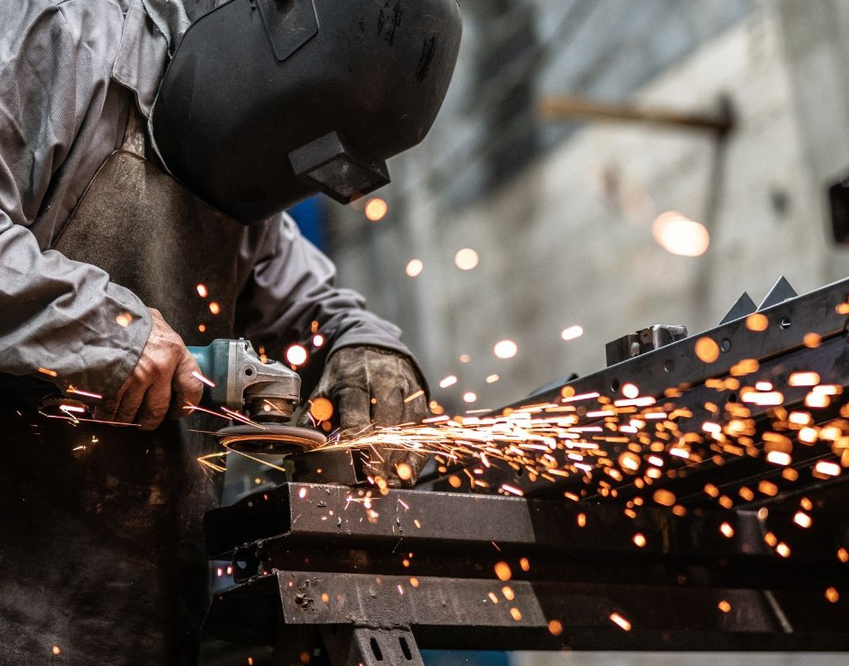
In industrial grinding, stability is often described as a performance outcome.
However, from an engineering perspective, stability is not a property of the abrasive wheel itself.
It is a system response emerging from the interaction between abrasive grains, bond structure, and external operating conditions.
1. Stability Begins at the Grain Level
Every grinding process starts with individual abrasive grains engaging the workpiece surface.
Each grain behaves as a micro-cutting element subjected to dynamic mechanical stress.
When conditions are stable, grains operate within a controlled penetration range, allowing consistent chip formation.
However, as operating conditions shift, the stress state at the grain interface also changes.
This alters how energy is distributed at the microscopic contact zone.
2. The Mechanism of Instability: Stress Redistribution
Grinding instability does not occur suddenly.
It develops through a gradual redistribution of mechanical and thermal stress across the contact interface.
This process typically follows a sequence:
Increasing grain dullness reduces effective penetration depth
Contact area expands as cutting efficiency decreases
Frictional interaction becomes dominant over cutting interaction
Local heat accumulation accelerates bond softening
Grain retention behavior becomes inconsistent
At this stage, the system transitions from a controlled cutting process to a mixed cutting–rubbing regime.
3. System Response: From Cutting to Energy Dissipation
Once the grinding system enters an unstable state, energy flow changes fundamentally.
Instead of being primarily converted into material removal, input energy is increasingly dissipated through:
Heat generation at the interface
Elastic deformation of the bond system
Micro-vibration of the contact zone
Irregular grain detachment events
This shift reduces effective grinding efficiency even if machine power remains unchanged.
4. Stability Is Defined by Balance, Not Strength
A common misconception in abrasive engineering is that higher bond strength or harder wheel construction automatically improves stability.
In reality, stability depends on balance between three competing behaviors:
Controlled abrasive wear (for continuous cutting edge renewal)
Structural retention (to maintain wheel integrity under load)
Thermal response (to prevent localized overheating)
When any one of these dominates, system equilibrium is lost and performance becomes unpredictable.
5. Why Identical Wheels Perform Differently
One of the most frequently observed phenomena in industrial grinding is inconsistent wheel behavior across different environments.
This is not caused by product variation, but by system-level differences such as:
Contact pressure distribution
Machine rigidity and vibration
Operator feed consistency
Thermal dissipation conditions
Workpiece material variability
These factors alter the stress state at the grain interface, leading to different stability outcomes for the same abrasive tool.
6. Engineering Objective: Controlled System Equilibrium
From a design perspective, the goal of an abrasive system is not to maximize aggressiveness or hardness.
The objective is to maintain a controlled equilibrium where:
Grain engagement remains consistent
Bond wear occurs in a predictable manner
Thermal buildup is distributed rather than localized
Cutting efficiency remains stable over time
This is what defines industrial-grade abrasive performance.
7. VEXA Engineering Perspective
At VEXA, abrasive systems are designed to operate within a defined stability window.
Rather than focusing solely on cutting speed or initial aggressiveness, the engineering objective is to ensure:
Predictable grain exposure behavior under load
Stable bond response under thermal stress
Consistent energy transfer at the grinding interface
Reduced variability across different operating conditions
The result is not just higher performance at a single point in time, but consistent performance throughout the tool lifecycle.
Final Insight
Grinding stability is not defined by the abrasive itself.
It is defined by how the entire system responds to mechanical, thermal, and material interactions over time.
When these interactions remain balanced, the grinding process becomes predictable, efficient, and controllable.
When they are not, even high-quality tools will exhibit inconsistent performance.
VEXA — Professional Through Focus.


